
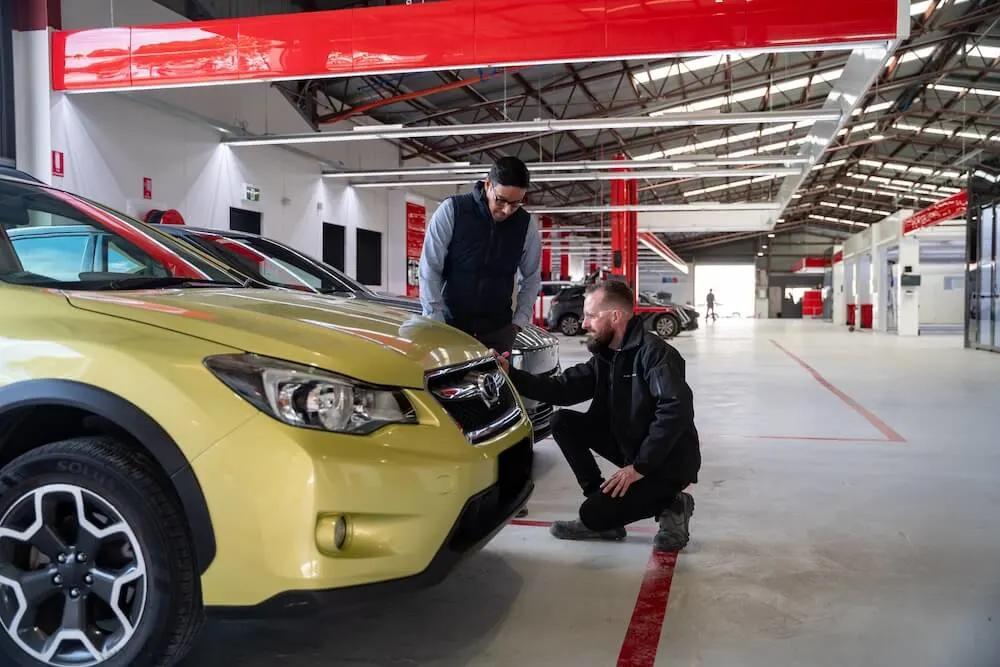
You walk out to your car, and there it is: a long, deep scratch along the door. Your first thought is frustration. Your second question is, “How much is this going to cost me?” The price of automotive spray painting can feel confusing, but it mostly comes down to whether you need a quick spot repair, a full panel repaint, or a complete respray of the entire vehicle.
For the most common damage, like a keyed door or a scuffed bumper, you’re usually looking at a single-panel repair. But here’s what surprises most people: a repairer can’t simply paint the damaged door and call it a day. Doing so can leave a noticeable, mismatched patch that screams “I’ve been repaired!” This is where a crucial technique comes into play.
To create an invisible repair, technicians use a process called blending. This involves lightly spraying the new paint into the edges of adjacent panels—like the front wing and rear door—so the new colour transitions seamlessly into the old. This step is especially important for modern metallic and pearl finishes that change appearance under different lights and viewing angles.
That extra labour and material is why the cost to paint a single panel can vary so widely. It’s not just about covering the scratch; it’s about matching the factory look and protecting the surface for the long term. If the damage is part of an insurance claim, choosing a trusted repair network matters—SMART follows insurer-aligned processes designed for consistent quality and safe outcomes, including on modern vehicles with ADAS and EV considerations. SMART repairers follow documented processes, use manufacturer-aligned data where available, and can arrange ADAS recalibration, EV safety checks, and proper structural repairs when required.
The #1 Factor in Your Paint Job’s Price: What Is ‘Prep Work’?
When you get a quote for a paint job, it’s easy to assume the biggest expense is the paint itself. In reality, that’s rarely the case. For any lasting result, 70–80% of the cost is usually tied to meticulous prep work—the labour-intensive process that happens long before any colour is sprayed. This is the single biggest driver of auto painting prices, because prep is what determines adhesion, smoothness, and durability.
Think of it like painting a room in your house. You wouldn’t paint straight over dirty, peeling walls and expect a clean finish. The same principle applies to your car. A repairer spends most of their time making the surface as close to perfect as possible. Differences between quotes often come down to how much preparation is included, how far the blend extends, and whether trims, lights, or mouldings are removed for access.
The Essential Steps of Paint Preparation
So, what does this crucial preparation involve? The paint correction cost before colour is applied usually covers several non-negotiable steps:
- Washing & Degreasing: Removing dirt, road grime, wax, and oils so the new paint bonds properly.
- Sanding: Scuffing or stripping the old finish to create a smooth, uniform surface.
- Repairing Dents: Fixing dings, gouges, and imperfections so the final panel is straight.
- Masking: Carefully covering windows, trim, tyres, sensors, and lights to prevent overspray.
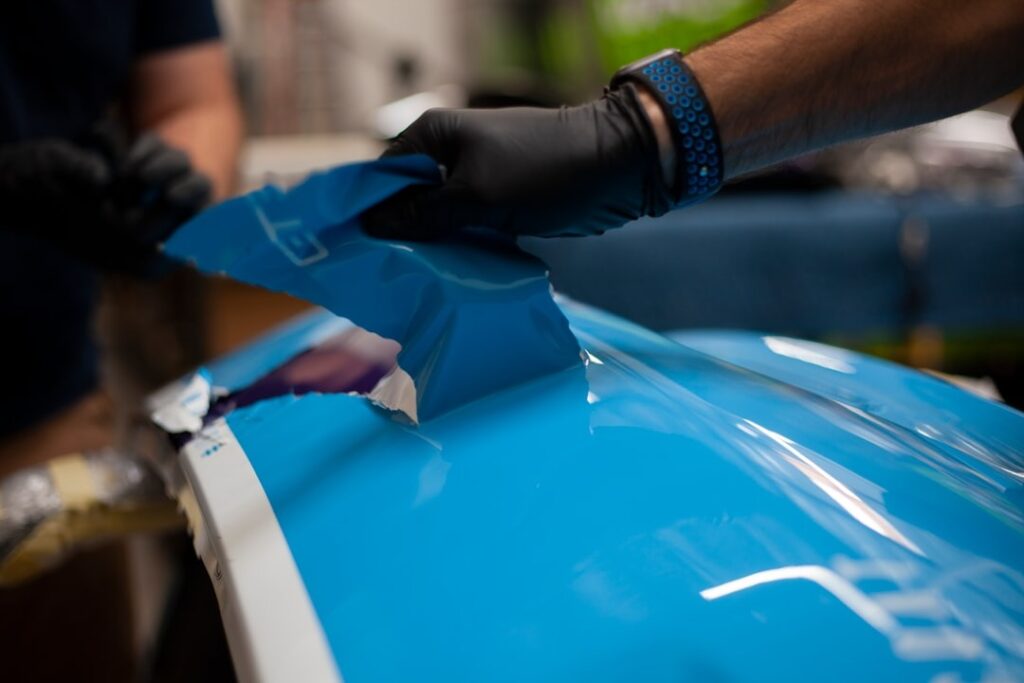
Skipping any of these steps is the fastest path to a short-lived repair. Paint applied over contamination or poor sanding can bubble, peel, or flake. Even something as simple as clean masking can be the difference between a neat edge and visible overspray. When a price seems unusually low, it may simply mean the scope is narrower—less disassembly, fewer stages of sanding, limited blending, or no allowance for correcting underlying damage—so always ask what’s included.
Single-Stage vs. Two-Stage Paint: A Simple Guide to Quality and Cost
Once the prep work is done, the type of paint system sprayed onto your car is the next major factor in the final price and finish. You can think of this choice as an “all-in-one” versus a “two-step” system. The quicker, lower-material option is single-stage paint, where colour and gloss are combined and applied in one go. This can be suitable in specific situations, such as some fleet vehicles or solid colours, where an exact factory match isn’t critical.
In contrast, two-stage paint is the process used on virtually all modern cars. A technician first sprays the colour (the base coat), then applies a separate, durable clear coat over it. That clear coat is the thick, glossy layer that gives your car its depth of shine and acts as a protective shield against UV, weathering, and light scratches. If you’ve ever seen paint flaking or peeling, you’re often looking at a failing clear coat, and repairs must address that protective layer—not just add more colour on top.
The single-stage vs two-stage paint cost difference can be significant, because a two-stage job requires more materials, more spray time, and more controlled curing. This is particularly true for metallic finishes, where the clear coat is essential for depth and consistent sparkle. For most manufacturer-matched repairs, a two-stage system is the correct approach. If a quote proposes a different system, ask how it will match your car’s factory finish and how the warranty is handled.
Your Car Paint Job Estimate: Ballpark Price Ranges for Common Jobs in Australia
Alright, let’s get down to the numbers. You now understand that prep work, blending, and paint systems are the biggest cost drivers, but how does that translate to the final bill? While every car and repair is different, spray painting generally falls into three tiers based on scope and finish expectations. Knowing the difference helps you set a realistic budget and compare quotes properly.
An Entry-level job is usually a cosmetic refresh for older vehicles or low-stakes panels. It may use simpler processes and a tighter scope to keep costs down, and it can look good from a normal distance, but it may not replicate a factory finish up close. A Standard job is what most owners want for a daily driver. It includes proper prep, a two-stage system, and blending where needed, aiming to restore the panel to a factory-like appearance with durable protection. A Premium job is a higher-detail finish where extra time is spent on panel straightness, edge work, and polishing for a showroom result.
To give you a better estimate and typical costs for common repairs in Australia, here are general ranges (AUD)
- Bumper scuff or scratch repair: $300 – $800
- Painting a single panel (door, wing): $450 – $1,200
- Full car respray (entry-level scope): $1,500 – $3,500
- Full car respray (standard quality): $4,000 – $8,000
- Full car respray (premium/showroom): $10,000+
Remember, these figures are a starting point. Colour type, panel condition, and how far blending is required can shift the quote. If the job is insurance-related, SMART’s repair network works within insurer-aligned processes to deliver consistent repair quality and safe, documented outcomes.
Beyond the Basics: 3 More Factors That Can Increase Your Final Bill
Those ballpark figures are a great starting point, but a few specific factors can push the final bill higher, even within a standard tier. Vehicle size is the most obvious; an SUV, ute, or large van has more surface area to sand, prep, mask, and paint than a small hatch, which increases labour hours and material use.
A bigger jump comes from changing your car’s colour completely. A colour change is far more involved than repainting exterior panels, because a proper result includes door jambs, under-bonnet edges, boot channels, and other visible areas. If those “hidden” sections aren’t painted, the old colour shows the moment you open a door. That’s why a full colour change can add thousands of dollars to a quote, even when the exterior panels look straightforward.
Finally, the paint itself can change the maths. While most cars use a two-stage system, some premium colours are three-stage. These include pearly whites, vibrant reds, and special effects finishes. They require a base colour, a translucent mid-coat to create depth, and then the clear coat. That extra, delicate step increases both material cost and labour, and it also raises the importance of accurate blending for a seamless match.
Those higher costs naturally lead many people to ask: Is it cheaper to wrap or paint a car?
Is It Cheaper to Wrap or Paint a Car?
When considering a colour change or a large respray, many drivers wonder if a vinyl wrap is a more budget-friendly choice. So, is it cheaper to wrap or paint a car? If you’re comparing quality to quality, the answer is often no. A professional full-car wrap from a reputable installer commonly sits in the same price range as a standard quality respray, especially once you factor in complex shapes, trim removal, and premium films.
The real value of a wrap isn’t always about saving money—it’s about flexibility and protection. Think of a wrap as a durable adhesive film that covers your car’s existing paint. Its biggest advantage is reversibility. It can help protect the factory finish from minor marks and sun fade, and when you’re ready to sell or change the look, the wrap can be removed to reveal the original paint beneath.
However, a wrap has one major requirement: it needs a smooth, stable surface to stick to. A wrap is not a fix for failing paint. If your car has peeling clear coat, deep scratches, stone-chipped edges, or rust, the vinyl won’t hide those problems; it can highlight them and may lift over time. Those issues must be repaired and smoothed first, which means paying for bodywork on top of the wrapping cost.
Ultimately, the decision comes down to your goal. If your paint is damaged and needs restoration, a professional respray is an investment in repair and protection. If your paint is already in good condition and you want a temporary new look or added protection, a wrap can be an excellent alternative—though not automatically the cheaper option.
How to Get an Accurate Quote and Avoid Overpaying
With an understanding of the work involved, you can now look past the price tag and evaluate the quality of a paint job by the scope of work. Your first step is to visit a repairer for an estimate. This isn’t a commitment; it’s a chance to ask better questions. Start with: “What specific prep work is included in this quote?” and “Which panels will be blended?”
If your vehicle is newer, also ask how the repair accounts for modern systems—such as sensors, cameras, radar units, or EV-specific requirements near battery areas. A trusted repair network like SMART is set up for modern vehicle repairs and insurer-aligned processes, helping ensure repairs are completed consistently, safely, and in line with manufacturer and insurer expectations.
Making a smart investment in your car’s longevity and appearance is about more than finding the lowest number. It starts with choosing a skilled partner who can explain the process clearly and stand behind the repair.
Need a Quote for Your Car’s Paint Repair?
Don’t let scratches or faded paint diminish your car’s value and appearance. At Capital SMART, we offer expert car spray painting services in Australia, ensuring a flawless finish and lasting durability.
Whether it’s a minor scratch, panel repaint, or a full respray, our experienced technicians use advanced techniques and high-quality materials to restore your vehicle to its pre-accident condition.
Ready for a seamless repair?
Get a Free Private Quote Today
Or, explore our full range of services: