
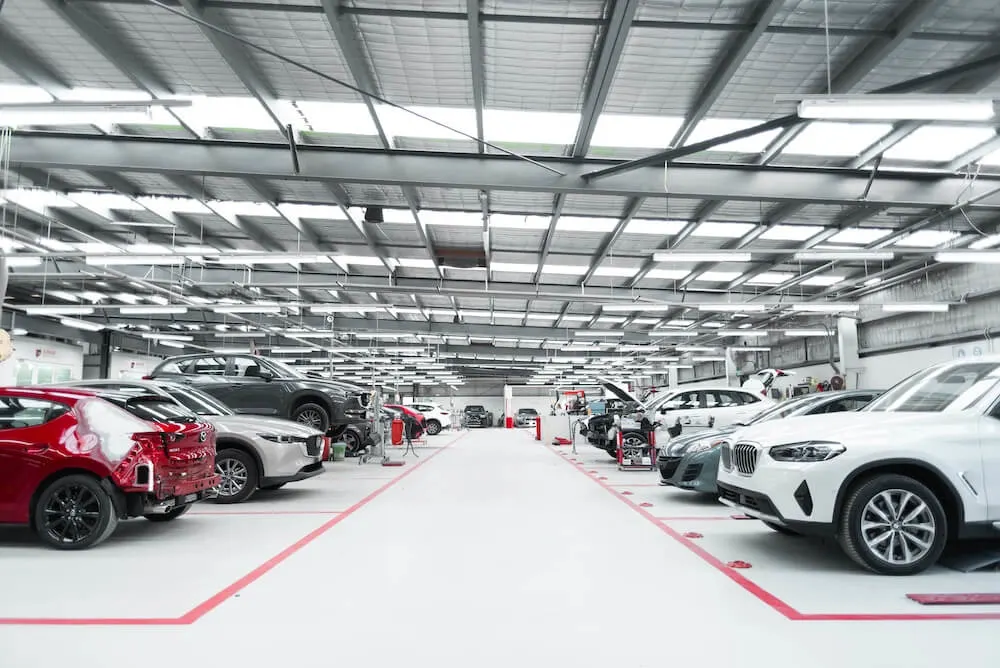
When a work ute or delivery van comes off second-best in a prang, the cost goes beyond the panel damage. Every day that a vehicle sits idle is a day of lost jobs, missed deliveries, and pressure on the rest of your fleet. Commercial vehicle smash repairs are built around that reality, with processes and priorities that differ from a standard passenger car repair.
Whether you run a single tradie ute, a small van fleet, or a national service network, knowing how the repair process works helps you plan downtime, manage insurance claims, and pick a repairer that takes your business as seriously as you do. This guide covers what counts as a commercial vehicle, what makes these repairs different, the typical damage scenarios, and what to look for when you choose where to send your vehicle.
What counts as a commercial vehicle?
In Australia, a commercial vehicle is any vehicle used primarily for business rather than private transport. The category covers a wide spread of body types, but the most common on Australian roads include:
- Single-cab and dual-cab utes (Hilux, Ranger, D-Max, Triton, Navara)
- Delivery and panel vans (HiAce, Transit, Master, Sprinter, Crafter)
- Light trucks under 4.5 tonnes GVM
- Branded fleet vehicles for trades, services, and last-mile delivery
- Dealership and hire fleet stock
According to the Australian Bureau of Statistics Motor Vehicle Census, light commercial vehicles make up a significant share of the national fleet, and that share has grown steadily as utes have overtaken passenger cars in new vehicle sales.
For most repairers, the term “commercial vehicle smash repairs” covers light commercial vehicles under 4.5 tonnes. These vehicles share most repair methods with passenger cars while requiring some specific adaptations. Heavier rigid trucks and prime movers are typically handled by dedicated heavy vehicle specialists.
Why commercial vehicle smash repairs are different from passenger car repairs
Fixing a work vehicle is not the same as fixing a passenger car, even when the panel damage looks identical. A few things change the picture.
Built tougher, repaired carefully. Many utes use ladder-chassis construction (a separate body bolted to a steel frame), which behaves differently in a collision than the monocoque shell of a passenger car. Structural repairs need to be done to manufacturer specifications by technicians trained to current standards. Industry training body I-CAR Australia sets the qualification benchmark for collision repair technicians working on modern vehicles, including light commercials built with high-strength steels and fitted with advanced driver-assist systems.
Branding and signage. Fleet vehicles often carry sign-written livery, vinyl wraps, or company colours. A standard respray will not cut it. The colour, finish, and signage need to be restored so the vehicle returns to the road looking identical to the rest of the fleet.
Fitted accessories. Roof racks, ladder racks, canopies, drawer systems, tool boxes, internal van shelving, and tow bars all need to be removed before paint or panel work and refitted afterwards. Quoting and scheduling have to account for that extra labour.
Loaded with tools. Customers often need to remove and store thousands of dollars in tools or stock before drop-off. Good commercial repairers will offer secure storage or coordinate a clean handover.
Downtime hurts more. A passenger car off the road for two weeks is an inconvenience. A van off the road for two weeks is a real revenue hit, which is why commercial repairers compete on turnaround speed as much as price.
Common damage scenarios for utes and vans
The damage patterns we see on work vehicles cluster around how they are used day to day:
- Reversing damage. Building sites, depots, and tight delivery streets generate a steady stream of rear bumper, tailgate, and rear corner damage.
- Side panel scrapes. Narrow laneways, gates, and worksite obstacles take their toll on doors and quarter panels.
- Tray and tray rail damage. Ute trays are exposed and frequently hit by shifting loads, other vehicles, or low overhangs.
- Roller and barn door damage on vans, often caused by driving off while a rear door is still open.
- Roof and roof rack damage from underestimating clearance heights at car parks and drive-throughs.
- Front-end damage from low-speed urban collisions in heavy traffic.
Most of these fall into the small to medium drivable damage category, which can usually be turned around quickly without keeping the vehicle off the road for weeks.
The commercial vehicle smash repair process step by step
The repair workflow follows a similar shape to a passenger car job, with extra steps tailored to commercial use:
- Initial assessment. The repairer inspects the damage and identifies whether it is cosmetic, structural, or both. For insurance jobs, this stage feeds the assessor’s report.
- Quote and approval. A written quote is provided. For insured vehicles, the insurer reviews and authorises the work. Fleet customers with dedicated accounts often skip straight to scheduling.
- Accessory removal. Tool boxes, canopies, signage panels, and racks are removed and stored safely.
- Panel and structural repairs. Damaged panels are straightened, replaced, or reformed. Structural work is completed to factory specification.
- Paint and refinishing. Colour is matched (including custom fleet colours), and the repaired sections are sprayed and clear-coated to blend with the rest of the body.
- Sign-writing and vinyl. Where signage needs to be reapplied, this is usually coordinated with the customer’s regular signwriter or handled in-house.
- Reassembly, QC, and detail. Accessories go back on, the vehicle is checked, and a final clean ensures it returns to the customer ready to work.
How long do commercial vehicle smash repairs take?
For minor to medium damage on drivable vehicles, most repairs are completed within one to five working days. More complex jobs, such as heavier panel work, replacement parts on order, or significant structural repairs, can take one to three weeks.
Fleet repairers can often shave time off the standard turnaround through priority scheduling, dedicated account management, and streamlined insurer integration. If turnaround is critical to your business, ask the repairer up front what their average completion time is for vehicles like yours.
Choosing the right repairer for your work vehicle
When you are picking somewhere to send a damaged ute or van, look for:
- Trained, qualified technicians working to current industry standards
- Insurer-approved status if you are claiming on insurance
- Multiple locations if you run a multi-site or interstate fleet
- Dedicated fleet account management for business customers
- A lifetime guarantee on workmanship
- Clear communication about progress and pickup
- Experience with your vehicle type, including modifications and fit-out
For private customers paying out of pocket, Consumer Affairs Victoria outlines your rights to a written quote, fair pricing, and quality workmanship. These protections apply whether the vehicle is registered personally or to your business.
Capital SMART operates more than 60 repair centres across Australia and New Zealand, with dedicated fleet repair solutions set up to handle utes, vans, and work vehicles for trade businesses, hire fleets, and dealerships.
Insurance and private commercial vehicle repairs
How you pay for the repair depends on your situation:
Insurance claims. Most business motor insurance policies cover accident damage to commercial vehicles. Your insurer will either refer you to an approved repairer or let you choose, depending on the policy. The Insurance Council of Australia outlines how the motor claims process generally works in Australia.
Private repairs. For small damage where the cost is close to your excess, paying privately can avoid an at-fault claim and the premium impact that follows. Many fleet operators also handle minor cosmetic damage privately to keep no-claims discounts intact.
Fleet accounts. Larger operators often run dedicated repair accounts with consolidated invoicing, which simplifies admin and gets vehicles back on the road faster.
Frequently asked questions
How long do commercial vehicle smash repairs take?
Minor to medium damage on a drivable ute or van is typically repaired in one to five working days. Larger structural jobs or repairs that need imported parts may take two to three weeks. Confirm the timeline with the repairer when you book in.
Are smash repairs for utes more expensive than for cars?
Repair costs depend on the damage rather than the vehicle category. That said, removing and refitting accessories like canopies, racks, and tool boxes, plus reapplying signage, can add labour costs that a standard sedan would not have.
Will my fleet signage be restored after the repair?
Yes. Reputable repairers will coordinate with your signwriter or use in-house vinyl services to reapply branding, vinyl wraps, and decals once paintwork is finished. Provide the original signwriter’s details where possible to ensure a clean match.
Can I keep driving my ute while it is waiting to be repaired?
If the damage is purely cosmetic and the vehicle is roadworthy, yes. Drivable repair programs are designed for exactly this situation, so you keep the vehicle until the booking date, then drop it off for a fast turnaround.
Does business insurance cover smash repairs?
Most commercial motor policies cover accident damage, theft, and third-party liability. Coverage details (excess amount, replacement vehicle, glass cover) vary by insurer and policy. Check your policy schedule or speak with your broker to confirm what is included.
Final thoughts
Commercial vehicle smash repairs are a different game from passenger car work. The right repairer understands that downtime is the real cost, knows how to handle fitted accessories and branding, and can move quickly without compromising on quality.
If you need a repair on a ute, van, or fleet vehicle, you can find your nearest Capital SMART repair centre or get in touch with our fleet solutions team to set up a dedicated business account.