
Dealing with a car accident is stressful enough without the added anxiety of the unknown. Once the tow trucks have departed and the insurance claim is lodged, one pressing question remains for every driver: how long do smash repairs take? It is a frustrating uncertainty, and while there is no single, one-size-fits-all answer, understanding the professional repair process is the best way to gain clarity on what to expect.
The duration of a collision repair isn’t arbitrary; it is shaped by a complex combination of three core factors. The first is the severity of the damage itself—a simple cosmetic fix to a bumper is worlds apart from a major structural rectification requiring chassis alignment. The second is parts availability, as a specific headlight or sensor for your vehicle model might be in a local warehouse or essentially on a ship from overseas. Finally, the insurance process, including assessment, quoting, and official approvals, plays a crucial role that most vehicle owners don’t see behind the scenes.
By understanding how these three elements—Damage, Parts, and Insurance—interact, you can move from feeling powerless to being an informed participant. This guide will walk you through each stage of a professional insurance repair, demystifying the timeline so you know what is happening, why it is happening, and what questions you should be asking along the way. At Capital SMART, we believe that transparency regarding these stages is essential to the customer experience, helping you plan your life while we work to get you back on the road.
Minor Scrape vs. Major Crunch: Why Damage Severity is the #1 Factor
It is easy to assume that a minor bumper scuff will be a much quicker fix than a major collision. This obvious difference separates damage into two main categories: Cosmetic Damage and Structural Damage. A purely cosmetic job, like repairing a scraped door or a small dent on a drivable vehicle, might only take 1 to 4 days in a streamlined facility. However, if the car’s underlying safety cell is affected, you are likely looking at a repair timeline of several weeks.
Defining Structural Damage
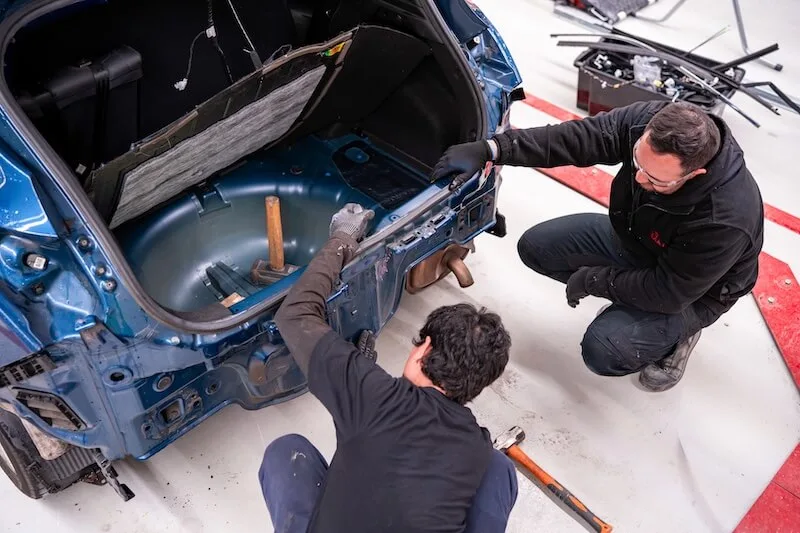
So what does “structural damage” actually mean? Think of it like your car’s skeleton. While cosmetic damage is on the “skin”—the visible panels, doors, and bumper covers—structural damage affects the core frame that holds everything together and protects the occupants. Repairing the car’s skeleton is a complex process that requires specialised equipment to pull and measure the chassis to millimetre-perfect manufacturer specifications.
This critical safety work is far more intensive than simply replacing a bolt-on panel. Crucially, what initially looks like simple cosmetic damage can often hide deeper issues. A crumpled fender might be concealing a bent support beam underneath, or a seemingly minor rear-end hit could have kinked the floor of your boot. This is why the damage you first see is often just the tip of the iceberg, and why a thorough assessment—standard practice across the Capital SMART network—is needed before a reliable timeline can be given.
If you are unsure about the state of your vehicle immediately after an incident, it is vital to check if your car is drivable before attempting to move it.
Step 1: The Quote, Assessment, and Insurance Waiting Game
Once your car is at the repair centre, the first job is to thoroughly inspect it and generate a detailed list of the required work. This forms the initial Repair Quote. A common misconception is that technicians can start fixing your car the moment this list is complete. In reality, this is where the first waiting period begins. Before any major work can commence, the repairer must send the quote to your insurance company and wait for their official approval to proceed.
To provide that approval, your insurer will typically involve an Insurance Assessor. Think of this person as an independent inspector whose job is to review the damage and the proposed repair plan on behalf of the insurance company. They verify that the repairs are necessary, fair, and directly related to the specific accident claim. This is a standard and crucial part of the process, ensuring that the work being paid for is accurate.
This entire workflow—from the initial quote and assessment to the assessor’s review and final Insurance Approval—can take anywhere from two to five business days, depending on the insurer’s workload. During this time, the repairer’s hands are often tied. Once the green light is given, the next phase is to carefully dismantle the damaged areas, which is often when technicians discover if any extra damage was hiding from view.
Step 2: Teardown and “Hidden Damage”
With insurance approval in hand, technicians can finally begin the physical work. This phase is called the Teardown, where the damaged sections are carefully dismantled. Think of it like a surgeon preparing for an operation; you cannot know the full extent of what needs fixing until you can see underneath the surface. Bumpers, guards, and lights are removed to get a clear view of the underlying structure.
This is where one of the most common factors affecting collision repair time comes into play: Hidden Damage. A plastic bumper cover is designed to flex and absorb minor impacts. While it might just look scraped or cracked on the outside, the metal reinforcement bar (reo bar) behind it could be crushed, or a crucial sensor bracket could be broken. These are issues that are impossible to spot during the initial visual inspection.
When this kind of unexpected damage is found, work on the vehicle must often pause. The repairer must document the newly discovered issues with photos and notes and submit a Supplementary Assessment to the insurer. Just like the initial approval, the shop must wait for the insurer to review and authorise these additional repairs and parts. This stop-and-wait cycle is a significant reason for unexpected delays, but it is necessary to ensure the vehicle is returned to pre-accident safety standards. Capital SMART repair centres follow consistent, quality-controlled processes to identify these issues as early as possible, minimising the duration of these interruptions.
Steps 3 & 4: From Metal Work to Flawless Paint
Once all necessary parts have arrived and approvals are sorted, technicians move to the hands-on work of restoring your vehicle’s geometry. This isn’t just about hammering out dents; it is a precision task involving structural and internal repairs. Panel beaters focus on alignment, ensuring every new door, guard, and bonnet lines up perfectly with the existing bodywork. The gaps need to be even, and the contours must flow seamlessly.
The Painting and Curing Process
With the new panels fitted, your car moves into the paint shop—a stage that often takes longer than customers expect. Achieving a durable, perfectly matched finish is a multi-layer process. Just like painting a wall at home, one coat is never enough. Your car’s panel first receives a primer for adhesion, then multiple coats of colour-matched basecoat, and finally, several layers of clear coat to provide that glossy shine and UV protection.
The most crucial variable here is time. Each of those layers needs to properly dry and harden, a process called Curing. Rushing this step can lead to a soft finish that chips easily or looks dull. This is why, even for a single panel replacement, a vehicle will likely spend 2 to 4 days in the refinish department. After the final coat is fully cured and polished, the vehicle is ready for reassembly. Capital SMART facilities are designed to optimise this flow, utilising advanced technology to ensure efficient turnaround without compromising quality.
Step 5: Reassembly and ADAS Calibration
With the fresh paintwork cured, the final step is reassembly. In the past, this was a straightforward process of bolting on a bumper and plugging in a headlight. Today, however, reassembly is a high-tech operation. Modern bumpers, windscreens, and mirrors are often packed with a hidden network of sensors, cameras, and radar units that are vital to your vehicle’s operation.
Many of these safety features—like Autonomous Emergency Braking (AEB), lane-keeping assist, or blind-spot monitoring—rely on these components. According to safety authorities like ANCAP, the precision of these systems is critical for occupant safety. After a collision, if a sensor is off by just a millimetre, it can cause the system to fail or misinterpret road conditions.
To ensure they work as intended, they must be professionally recalibrated. This crucial safety check, known as ADAS (Advanced Driver-Assistance Systems) calibration, is now a standard part of many repairs. It requires specialised digital equipment and can add significant time to the end of the repair. It is a primary reason the final stage can take longer than expected, but it is non-negotiable for safety.
“Why Is My Car Repair Taking SO LONG?”
Even when everything goes smoothly, delays can happen. If your timeline gets pushed back, it is almost always due to one of these three factors outside the repairer’s direct control:
- Global Parts Supply: This is the single biggest cause of delays. A specific part for your model may need to be shipped from overseas or could be on backorder. Repairers cannot complete the puzzle with missing pieces.
- The Insurance Loop: If hidden damage is found, the Supplementary Assessment process starts another waiting period for the insurer to approve the extra work.
- Capacity and Scheduling: High-quality repair centres are busy environments. Your car enters a queue for specific equipment, such as the chassis alignment bench or the spray booth.
For business customers, these delays can be costly. This is why specialised fleet accident repair solutions often prioritise minimised downtime through dedicated supply chains and streamlined booking processes.
How You Can Help Speed Up Your Repair
While you cannot force a part to arrive faster from Japan or Germany, you can play a role in preventing unnecessary hold-ups. Your most powerful tool is communication. The repair process is a chain of approvals between you, the repair shop, and the insurer. If your insurer calls with a query or the shop needs an excess payment sorted, responding immediately keeps the momentum going.
Choosing a reputable repair network from the start also makes a difference. A large-scale repair network benefits from established supplier relationships, standardised processes, and dedicated insurer liaison teams, helping minimise avoidable delays. Network repair models are designed to manage these logistical challenges more effectively, leveraging national buying power to secure parts and expedite approvals. Before you commit, ask how they keep customers informed. Do they use SMS updates? Do they have a dedicated customer service team?
Finally, set clear expectations. When you drop off your vehicle, confirm the shop’s policy on updates and ask about mobility options. If you need to stay on the road, knowing where to find a repair centre that can assist with courtesy cars or rental coordination is key to reducing the disruption to your life.
Your Roadmap to a Smoother Repair
Before, your car’s repair time was likely a source of stress. Now, you can see the smash repair timeline not as a black box, but as a predictable sequence of stages. You understand why the average time varies so much and have a realistic idea of what to expect:
- Minor Cosmetic Repairs: 1–4 Days
- Moderate Non-Structural Repairs: 5–10 Days
- Major Structural Rectification: 2–4+ Weeks
Armed with this roadmap, you are no longer just waiting in the dark. You are an informed participant who understands the process. This shift transforms frustrating uncertainty into manageable expectations, giving you back a sense of control while the experts work to get you safely back on the road. For more information on navigating the claims process, resources like the Insurance Council of Australia offer helpful guides for consumers.