
A car accident throws everything into chaos. One minute you’re driving to work, the next you’re exchanging details on the side of the road and wondering how long you’ll be without your car. For most drivers, the smash repair process feels like a black box. You hand over your keys and hope for the best. It doesn’t have to be that way.
This guide walks you through the smash repair process from the moment an accident happens to the day you collect your vehicle. You’ll learn what to expect at each stage, how insurance fits in, and what a modern repairer does to shorten turnaround times. Whether the damage is a scraped bumper or a dented panel, knowing the steps ahead of time makes the whole experience faster, clearer, and less stressful.
Why Understanding the Smash Repair Process Matters
Minor collisions are far more common than most people realise. According to Budget Direct’s Australian car accident research, thousands of insurance claims are lodged every week for low-speed, drivable incidents like car park scrapes, rear-end bumps, and reversing accidents. Most of these vehicles don’t need a full rebuild. They need a clean, fast, quality repair from a repairer who can tell you exactly what’s happening at every stage.
Repair approaches vary depending on the type of damage and repair model. For minor drivable damage, rapid-repair workflows can often reduce repair time significantly. Knowing the difference helps you ask the right questions and pick the right repairer for your damage.
Step 1: Take Care of the Immediate Aftermath
Safety first. If anyone is injured, call 000. If the vehicles are drivable and there are no injuries, move them clear of traffic. Take photos of the damage, the position of both cars, and any nearby signs or landmarks. Swap names, phone numbers, addresses, licence numbers, and insurance details with the other driver.
Write down the time, date, and exact location. If there are witnesses, grab their details too. These five minutes of documentation make every step that follows easier, from lodging your claim to finalising the repair.
Step 2: Contact Your Insurer
Most Australian comprehensive car insurance policies require you to notify your insurer as soon as reasonably possible after an accident. Call the claims line, explain what happened, and have your photos and the other driver’s details ready.
Your insurer will either direct you to an approved repair network or ask you to choose a repairer yourself. The Insurance Council of Australia provides a clear overview of how the claims and recovery process works if you’re unsure of your next move. If your insurer partners with a rapid repair network like Capital S.M.A.R.T., booking your repair can often be completed in the same phone call.
Step 3: Get Your Damage Assessed
Once your claim is lodged, your vehicle needs to be assessed. There are two main ways this happens:
- Digital assessment: You upload photos through your insurer’s app or a repairer’s online quote tool. For minor damage, this is often enough to confirm the repair scope and cost.
- In-person assessment: You bring the vehicle to a repair centre where a qualified estimator inspects the damage, takes measurements, and identifies any hidden issues behind the panels.
The assessment produces a detailed quote covering parts, labour, paint, and any sublet work such as wheel alignment or windscreen replacement. If you’re paying privately rather than going through insurance, you can get a private quote directly from the repairer without involving a third party.
Step 4: Book Your Repair In
Once the quote is approved by you or your insurer, you’ll be offered a drop-off date. This is also when you sort out replacement transport. Some insurance policies include a hire car while your vehicle is being repaired, and many repairers can arrange one for you if your policy allows.
Before you hand the keys over, clear out any personal items and remove toll tags if you want to use them in a hire car. If you’re booking with Capital S.M.A.R.T., keep an eye out for the booking confirmation SMS, which includes a link to a short “What to Expect” video. It walks you through the GIC image capture, fuel requirements, what to remove from your vehicle, and the full S.M.A.R.T. end-to-end repair process. A few minutes upfront saves time on the day. A reputable repair centre will also document the vehicle’s pre-repair condition with photos so there’s no confusion later.
Watch the What to Expect video.
Step 5: The Repair Itself
Here’s where the actual work happens. A complete smash repair process usually runs through six stages:
- Disassembly and strip-down: Damaged panels, trims, lights, and bumpers are carefully removed. This exposes any secondary damage that wasn’t visible from the outside.
- Structural and chassis work: If the frame has shifted or a structural panel is bent, it’s pulled back into alignment using purpose-built measuring and straightening equipment. Most drivable vehicles don’t need this step.
- Panel repair or replacement: Dents are reshaped, creases are worked out, and damaged panels are replaced with new parts where needed. This is the craft end of the job and where experienced panel beaters earn their keep.
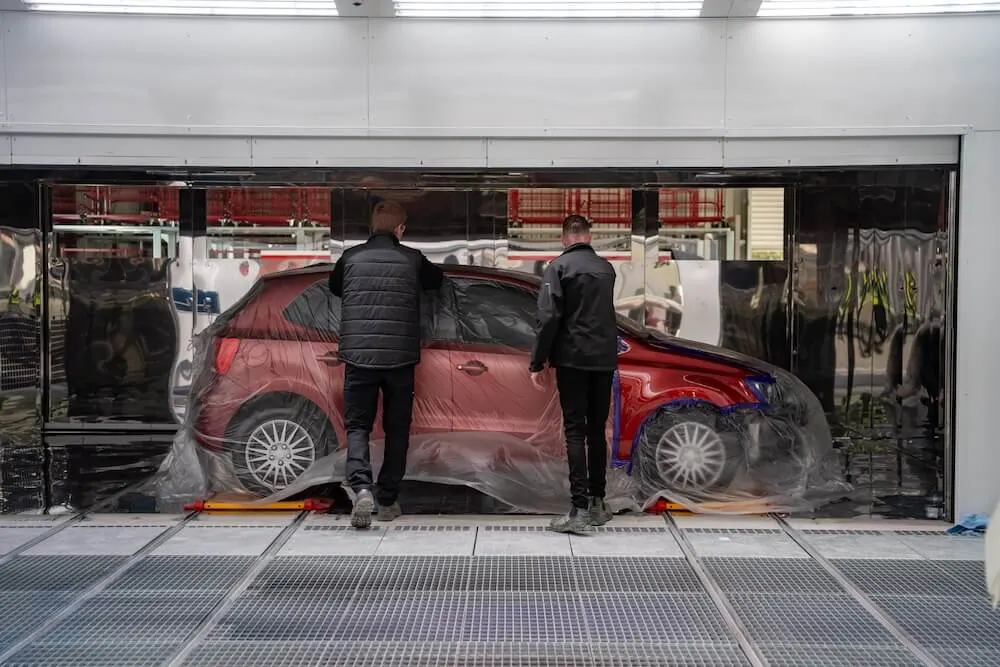
- Preparation and paint: Repaired areas are sanded, primed, and sprayed in a colour-matched booth. Paint is then baked to cure and harden it. Colour matching is done with computerised tools to ensure the new paint blends seamlessly with the surrounding panels.
- Reassembly: Parts removed during strip-down are refitted. Lights, trims, bumpers, badges, sensors, and cameras all go back on, and electronic systems are recalibrated where required.
- Quality control and detail: Every repair is inspected against the original quote. The vehicle is cleaned inside and out, the repaired areas are polished, and a final road test confirms everything is working as it should.
Modern repairers follow technical standards set by bodies like I-CAR Australia, which trains and certifies collision repair technicians to manufacturer specifications. Ask your repairer whether their technicians are I-CAR trained. It’s a strong signal of quality.
Step 6: Pickup and Post-Repair Checks
When your car is ready, you’ll be contacted to arrange collection. Before you drive away, take a few minutes to inspect the work:
- Check the paint in natural daylight. Look for colour match, texture, and any visible overspray.
- Open and close every door, boot, and bonnet that was worked on. Panels should line up evenly with consistent gaps.
- Test lights, indicators, parking sensors, and cameras on the repaired side of the vehicle.
- Ask for a written repair summary and warranty certificate before you leave.
If anything looks off, raise it before you sign the collection paperwork. A good repairer will address concerns on the spot rather than asking you to come back.
Step 7: Your Repair Warranty
Every reputable smash repairer offers a warranty on workmanship and paint. Warranty length varies. Some offer 12 months, others offer a lifetime guarantee for as long as you own the vehicle. Capital S.M.A.R.T.’s lifetime repair guarantee covers the work on every repair we complete, giving you ongoing peace of mind long after you’ve driven off.
Your consumer rights also apply to vehicle repairs. The ACCC’s consumer guarantees require all services, including smash repairs, to be carried out with due care and skill, fit for purpose, and delivered within a reasonable time. Keep your invoice and warranty certificate in a safe place in case you need to refer back to them.
How Long Should a Smash Repair Take?
Traditional repair timelines can stretch to two, three, or even four weeks for more serious collisions. If your vehicle is drivable with minor to moderate damage, the wait doesn’t have to be that long.
Many minor to moderate drivable repairs can be completed within one to three days, depending on parts availability, insurer approvals, and vehicle complexity. Purpose-built rapid repair centres use streamlined workflows, digital tracking, and pre-booked parts to keep things moving, but repair timelines still vary based on damage severity, vehicle type, and parts supply. If you’ve been quoted a multi-week turnaround for what looks like cosmetic damage, it’s worth getting a second opinion from a repairer who specialises in fast-track work.
Frequently Asked Questions
Can I choose my own smash repairer?
Some insurance policies allow you to choose your preferred repairer, while others may require repairs to be completed through an approved repair network. Check your Product Disclosure Statement (PDS) or speak with your insurer for details.
Who pays for the smash repair, me or the insurance company?
If you’re making a claim through comprehensive insurance, your insurer pays the repairer directly once the claim is approved. You’ll typically need to pay your excess, which is usually collected by the repairer on pickup or invoiced separately by the insurer. If you’re paying privately, you pay the repairer in full once the work is complete.
What’s the difference between a panel beater and a smash repairer?
A panel beater is a tradesperson who reshapes and repairs metal panels. A smash repairer is a full-service business that coordinates panel beating, spray painting, mechanical work, and parts, often under one roof. Most modern smash repair centres employ panel beaters, spray painters, and technicians as part of a single team.
Will the repaired area look the same as before?
A high-quality repair aims to closely match the vehicle’s original finish and appearance. Computerised paint matching, bake-cured finishes, and skilled reassembly make the repaired area blend seamlessly with the rest of the vehicle. Always inspect the work in natural light at pickup and raise anything you’re not happy with.
What if I notice a problem after I pick up my car?
Contact your repairer straight away. Under their workmanship warranty, they’ll reinspect the work and rectify any genuine defects at no cost. Keep your repair summary and warranty certificate handy, as they’ll ask for the job reference.
Next Steps
Knowing the smash repair process end-to-end puts you in control after an accident. You know what questions to ask, what timelines are reasonable, and what a quality repair should look like when you collect the keys. If you’ve had a minor collision and want a fast, guaranteed repair on a drivable vehicle, find your nearest Capital S.M.A.R.T. repair centre or get in touch with our team to book in. Most repairs are completed in one to three days, backed by a lifetime guarantee, so you can get back on the road sooner.