
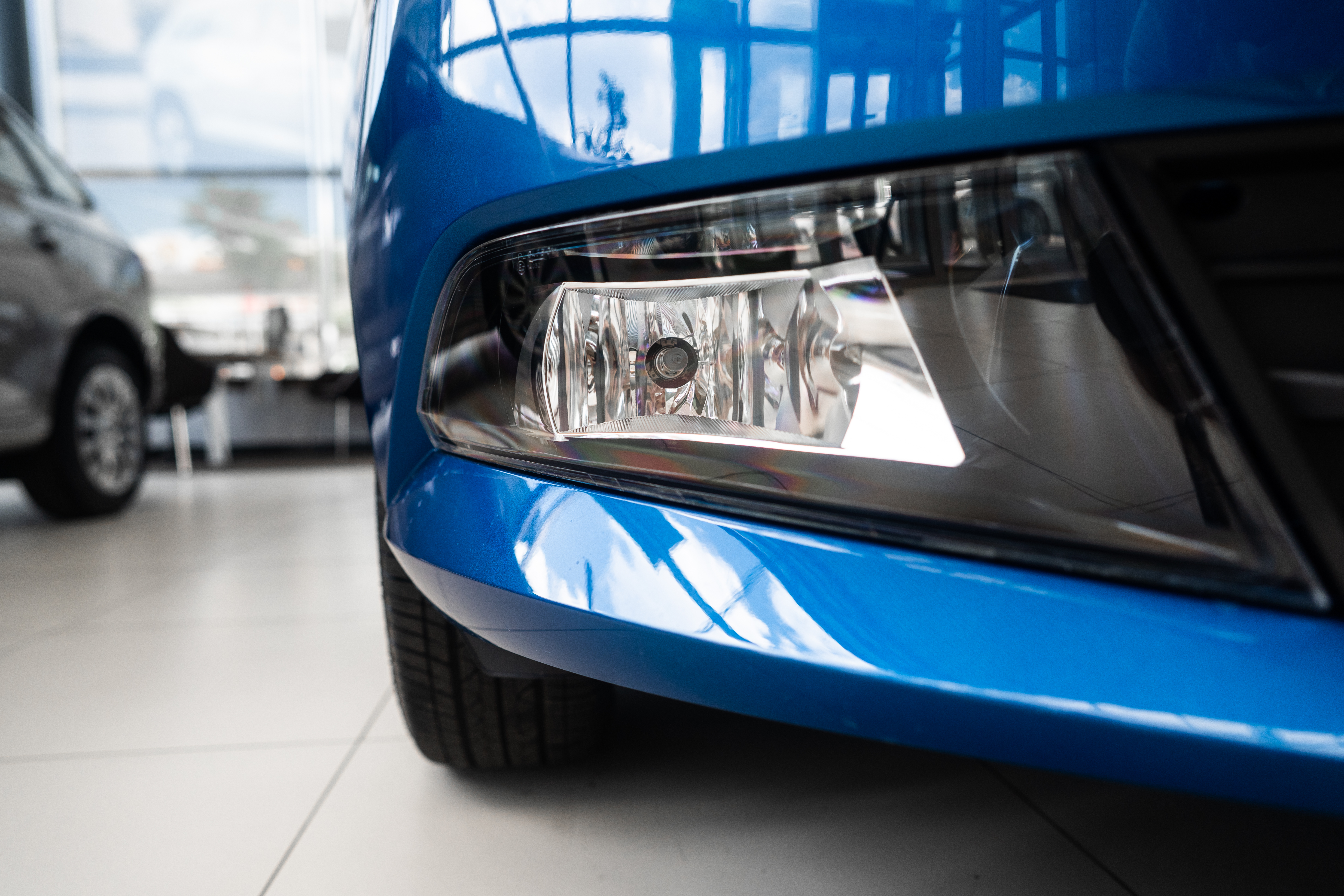
You reverse out of a tight car park, clip a pillar, and there it is. A scrape along the corner, or a crack where the plastic has given way. Most people assume the whole thing now needs replacing.
Often it doesn’t. A large share of the damage that comes through a collision repair centre is repairable, and a bumper repair is usually faster and less expensive than fitting a new part. But not always, and the reasoning has shifted in the last few years. On most vehicles built in the past decade, the front and rear assemblies carry parking sensors, reversing cameras, and increasingly the radar behind automatic emergency braking.
Here is what a repairer actually assesses, where the line between repairing and replacing sits, who has the final say, and what you are entitled to expect from the finished job under Australian law.
What a Modern Bumper Actually Is
When most people say “bumper”, they mean the painted plastic skin on the front or rear of the car. That is the bumper cover, and it is one layer of three.
- The cover: the visible painted panel, usually a moulded polypropylene blend designed to flex and return to shape.
- The energy absorber: a foam or honeycomb block behind the cover that soaks up low-speed impacts.
- The reinforcement bar: a steel or aluminium beam mounted to the chassis rails, often through crush cans engineered to collapse in a controlled way.
How the cover looks tells you very little about what sits behind it. A cover can be badly torn while the bar underneath is untouched, or look almost presentable while the crush cans have already collapsed. A proper assessment covers all three layers, plus any electronics mounted in them.
When a Bumper Repair Is the Right Call
Scuffs, scrapes and paint transfer
This is the bulk of car park damage. Paint transferred from another vehicle often sits on top of your clearcoat rather than through it. Where the plastic underneath is intact and the panel holds its shape, the work is refinishing rather than replacement, and the outcome comes down to colour matching and how well the new paint blends into the adjacent guards, which is where paint and refinishing earns its keep.
Dents where the plastic has recovered
Bumper covers are designed to deform and spring back. If the panel has returned to its original shape and the only remaining problem is surface damage, replacement is hard to justify.
Cracks and splits, within limits
Plastic can be welded or structurally bonded, then filled and refinished. Whether that is appropriate depends on the length of the crack, whether it runs through a mounting point, whether the edges are torn, and whether the substrate welds reliably. A short crack in a flat section is a very different proposition to a split radiating out from a bracket.
When a Bumper Needs Replacing Instead
Broken mounting tabs and brackets
The tabs and clips holding the cover to the guards and chassis are thin, and often the first thing to break. Lose enough and the cover will not sit flush or hold alignment, no matter how good the plastic repair is. Panel gaps that refuse to close evenly are the usual tell.
Damage to the reinforcement bar or crush cans
These components are designed to deform once, absorbing energy in a single event, and are not meant to be straightened and reused. Where the bar or crush cans have taken the hit, replacement is a safety decision rather than a cosmetic one, and the job often extends into structural and internal repair work behind the visible panel.
Damage around sensors, cameras and radar
Sensor mounting positions are dimensionally critical. Filler across a radar aperture, or a repair that changes the thickness of plastic in front of a sensor, can interfere with how the system reads the road ahead. Where a sensor housing is damaged, or the repair would fall in a sensor’s field of view, replacing the cover is usually the safer call.
How Safety Sensors Changed the Bumper Repair Decision
Automatic emergency braking is now mandated on new light vehicles in Australia. ANCAP has confirmed that Australian Design Rule 98/00 covers car-to-car AEB and ADR 98/01 covers car-to-pedestrian AEB, applying to passenger cars, off-road passenger cars and light goods vehicles. ADR 98/00 applied to newly introduced models from March 2023 and to all models on sale from March 2025.
Nearly every front bumper on a recent Australian vehicle is now a sensor mount. Two things follow:
- Assessment is no longer purely visual. An electronic scan may be needed to establish whether a system has been affected at all.
- Some bumper work now requires recalibration afterwards, changing both the cost and the time the job takes.
Work that would have been straightforward on a 2012 hatchback can be a more involved decision on the same panel of a 2024 model. That is not a reason to default to replacement, but it is a reason to have the job done somewhere equipped to check.
Who Actually Makes the Call
Three parties can be involved, and it helps to know which one decides what.
The repairer assesses and recommends. They strip what needs stripping, inspect all three layers, scan where relevant, and put forward a method.
Your insurer authorises, if you are claiming. The insurer signs off on the method and the parts. Capital SMART accepts insurance repairs through its partnered insurers, including AAMI, GIO, Apia, Shannons Insurance, Vero, Bingle and Suncorp Car Insurance. Parts on an insurance job are original equipment manufacturer components or high quality equivalents, depending on your insurer’s guidelines and availability.
You decide, if you are paying directly. On a private repair you can ask for OEM parts and have availability and pricing assessed on that basis. For minor damage, compare the quote against your policy excess first, because paying directly is sometimes the better outcome. You can request a free private quote by uploading photos of the damage.
What the Law Guarantees, and What a Warranty Adds
This is where most articles on the topic stop short, and it is worth understanding before you authorise anything.
When you pay for a repair in Australia, the work carries automatic consumer guarantees under the Australian Consumer Law. The ACCC sets these out plainly: services must be carried out with due care and skill, to a standard at least as good as a competent provider with average skills and experience would deliver. They must be fit for the purpose you specified and supplied within a reasonable time. Parts must be of acceptable quality, which the ACCC defines as including safe, durable, free from defects, and having an acceptable appearance and finish.
That last phrase is more useful than it looks. A visible colour mismatch on a refinished bumper is not a matter of taste. Appearance and finish are part of the statutory standard.
Here is the distinction that gets muddled most often. Consumer guarantees are automatic, and the ACCC is explicit that a business cannot take them away by anything it says or does. A warranty is different: an extra promise a business chooses to make on top. Capital SMART states a lifetime warranty on all repairs across its network. That sits above your statutory rights rather than in place of them, and cannot reduce them.
The same applies to timeframes. The ACCC notes that a reasonable time depends on factors including the nature of the work and the availability of parts and materials. Most minor bumper work is completed within days, but a replacement waiting on an ordered part will take longer, and any repairer committing to a firm date before parts are confirmed is promising something outside their control.
Keep the paperwork. Capital SMART tracks each stage of a job through its Key2Key™ repair process, and a clear record of what was repaired, replaced and refinished is what makes a warranty claim straightforward years later.
Frequently Asked Questions
Can a cracked bumper be repaired?
Often, yes. Plastic covers can be welded or bonded and then refinished. Whether that is the right approach depends on where the crack sits, how long it is, whether the edges are torn, and whether it runs through a mounting point. A crack passing through a bracket or sitting over a sensor is more likely to need a replacement cover.
Is it cheaper to repair or replace a bumper, and what does it cost?
Repairing is usually cheaper, because you pay for labour and refinishing rather than a new part on top of both. That gap narrows when the damage needs extensive plastic work, or when recalibration is required either way. Actual cost depends on the damage, the method and how much paintwork is involved, so a quote with photos is the fastest way to a real number.
How long does a bumper repair take?
Most minor repairs including scratches, dents and bumper work can be completed within days. Timeframes extend when a part has to be ordered, when damage runs deeper than the cover, or when a safety system needs recalibrating. A repairer should give you an estimated timeframe once the vehicle has been assessed.
Will my parking sensors still work after a bumper repair?
They should, provided the work was carried out with the sensors in mind and any required recalibration was completed. Ask about this directly, because it is the step most commonly skipped on cheap repairs, and a sensor reading distances incorrectly is worse than one that has obviously failed.
Getting a Straight Answer on Your Bumper
Most bumper damage looks worse than it is, and most of it can be repaired. The cases that genuinely need a new part come down to broken mounting points, damage reaching the reinforcement bar, or electronics in the wrong place. An assessment tells you which one you have, and you are entitled to have it explained before work starts.
Capital SMART has been repairing accident damage for over 15 years, with a stated turnaround around 60% faster than the industry average. See the front and rear bumper repairs service page, or find your nearest repair centre.