
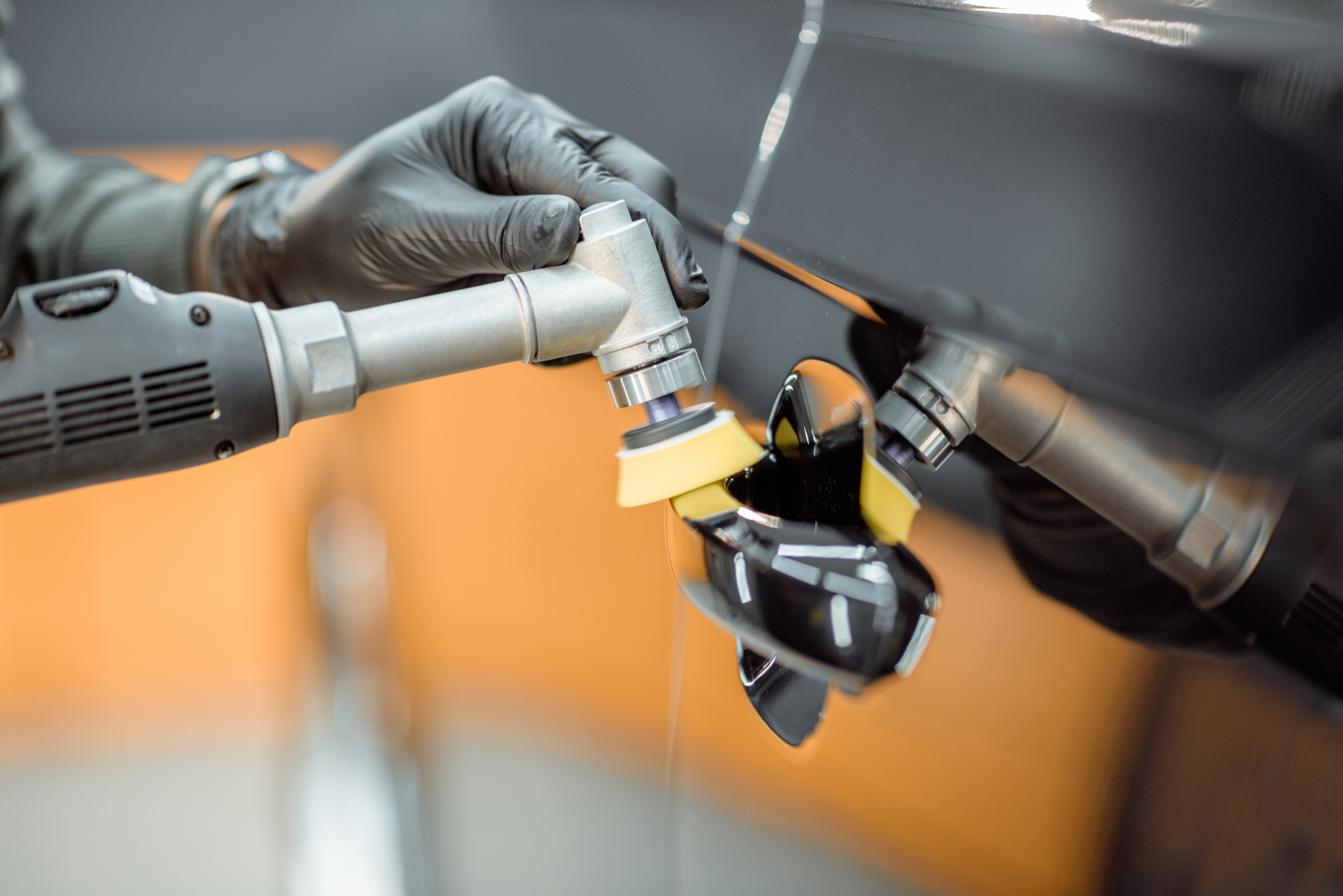
A stone chip is easy to ignore. It is a few millimetres wide, it sits on the front of the bonnet where you rarely look, and the car drives exactly the same. But a chip is a hole in the coating that protects your panel, and stone chip repair is one job that gets more expensive the longer you leave it.
Most advice on car paint chip repair stops at “fix it before it rusts”. This guide puts numbers on how quickly that can happen, using published corrosion data, and shows how the repair grows from a touch-up to a panel respray as a chip progresses. You will also see why rust that starts at a chip may not be covered by your manufacturer’s corrosion warranty.
What a Stone Chip Actually Damages
Car paint is a layered system only a fraction of a millimetre thick. On a typical steel panel, from the outside in:
- Clear coat: the glossy layer protecting the colour from UV and weather.
- Base coat: the colour, including any metallic or pearl effect.
- Primer: helps the paint bond and adds another barrier.
- E-coat: a corrosion-resistant coating applied to the bare body at the factory.
- Zinc: many steel panels are galvanised, carrying a thin zinc layer that corrodes first to protect the steel.
A stone flicked up at highway speed can punch through some or all of these layers. The bonnet’s leading edge, front bumper, mirror caps and the area behind the front wheels take most of the hits.
How Fast Does a Stone Chip Turn Into Rust?
Once a chip reaches the metal on a galvanised panel, the zinc is the last line of defence, and it is very thin. Electrogalvanised steel made for exposed car body parts is commonly supplied with zinc coatings of 5 or 7.5 microns per side, far thinner than a human hair.
How fast that zinc goes depends on where you drive and park. The standard ISO 9223 groups environments by corrosivity, and the American Galvanizers Association publishes first-year zinc corrosion rates for each category. Applied to a 7.5 micron layer:
| Environment (ISO 9223) | Zinc lost per year | Time to use up 7.5 microns |
|---|---|---|
| C3: urban, some salt in the air | 0.7 to 2.1 microns | About 3.5 to 10 years |
| C4: substantial salt influence | 2.1 to 4.2 microns | About 2 to 3.5 years |
| C5: marine | 4.2 to 8.4 microns | About 1 to 2 years |
On a 5 micron coating, each figure drops by a third. First-year rates run higher than long-term rates and a chip is not a flat test panel, so treat this as an indication, not a countdown. The pattern still holds: near the coast, a chip down to metal can look clean for a year or two, then start to rust.
Once rust starts, it creeps sideways under the surrounding paint and lifts it from below. That is how a two-millimetre chip becomes a bubbled patch.
From Chip to Panel Respray: How the Damage Grows
| Stage | What you see | What it usually needs |
|---|---|---|
| 1. Clear coat or colour chipped | A small dull or lighter mark | Colour-matched touch-up and seal |
| 2. Through to primer | A grey, white or dark spot | Touch-up with primer, colour and clear |
| 3. Down to metal | Bare metal visible | Cleaned, primed and refinished soon |
| 4. Rust in the chip | An orange-brown spot or ring | Rust removed, then a spot repair |
| 5. Rust under the paint | Bubbling or lifting paint | Larger area or whole panel refinished and blended |
Plastic bumpers will not rust, but chips still let weather attack the paint edges. Aluminium bonnets do not form red rust, yet aluminium can still corrode under damaged paint.
What Waiting Costs Compared With a Panel Respray
The cost of stone chip repair tracks the stage, not the size of the chip. At stages one to three, the work stays within the chip and its immediate surround. Our guide to how long a repaint takes notes that a touch-up or minor spot repair can be done in a few hours, while anything involving a full panel or blending needs at least one overnight cure.
Once rust spreads under the paint, the job becomes a panel respray: corrosion removed, the panel prepared and refinished, and new paint blended into the panels either side. CarsGuide puts respraying a single panel such as a bonnet or bumper at anywhere from a few hundred dollars to a couple of thousand. If the panel has rusted through, replacement adds parts on top.
Then there is who pays. Hyundai’s Australian warranty terms, for example, exclude corrosion and paint damage resulting from stone chipping, and defects from failing to have body damage repaired. Check your own manufacturer’s terms, but don’t assume rust that starts at a chip will be covered.
How Professional Stone Chip Repair Works
At Capital SMART, chips and chipped edges are handled through our paint and refinishing service, using the same process as any refinish, scaled to the damage:
- Assess: each chip is checked for depth, and whether the panel is metal or plastic.
- Prepare: the area is cleaned, sanded back to a sound surface and primed.
- Match: starting from the factory paint code, the colour is matched to your car as it is now, allowing for fading.
- Finish: colour and clear coat are applied and blended so the repair does not show as a patch.
Touch-up pens can seal a small chip in a pinch, but they rarely match once dry and cannot remove rust that has started. If chips sit alongside scrapes, our scratch and chip repairs cover both in one visit. On front bumpers, paint thickness over radar sensors is kept to specification, with any calibration coordinated as part of the job.
Stone Chip Repair FAQs
Can stone chips be polished out?
No. Polishing removes a thin layer of clear coat to level fine scratches, but a chip is missing paint. It has to be filled with matched paint.
How much does stone chip repair cost?
It depends on the number of chips, their depth, whether rust has started, your paint type and how much blending is needed. We don’t publish fixed prices, but you can upload photos for a free private quote. The cheapest time to fix a chip is before stage four.
Are stone chips covered by insurance?
It depends on your policy, so check your product disclosure statement. Any claim is subject to your excess, and minor chip repairs can cost less than that, so compare a private quote first.
Does paint protection film or ceramic coating stop stone chips?
Paint protection film is a clear, flexible film designed to absorb impacts, so it suits bonnets and bumpers. Ceramic coatings are very thin and mainly add gloss. Neither repairs existing damage, so fix chips before film goes on.
How long does stone chip repair take?
A small touch-up or spot repair can take a few hours. Rusted chips, or repairs that need a panel refinished and blended, take longer. We confirm a timeframe once your car has been assessed.
Get Stone Chips Fixed Before They Spread
A chip caught at stage one or two is a quick, contained repair. Left for a year or two near the coast, it can become a panel job your manufacturer’s warranty is unlikely to cover. Request a free quote online, choose a centre and time, and pay by card before work begins, or repair through our partnered insurers: AAMI, GIO, Apia, Shannons Insurance, Vero, Bingle and Suncorp Car Insurance. Find your nearest Capital SMART repair centre to get started.