
If your repair quote includes a line for ADAS calibration, it’s fair to ask what you’re paying for. The short answer is that ADAS calibration cost depends on how many of your car’s safety sensors need realigning, whether the manufacturer specifies static calibration, dynamic calibration or both, and the equipment the job requires. No single price applies to every car, and anyone who quotes one without seeing your vehicle is guessing.
So instead of a headline number, this guide explains the two calibration methods, the manufacturer tooling behind them and the Australian industry guidance that sets the standard, along with the published price points that do exist.
Why ADAS Calibration Has a Cost at All
ADAS (advanced driver assistance systems) covers features such as autonomous emergency braking, lane keep assist, adaptive cruise control and blind-spot monitoring. Each relies on a camera, radar or ultrasonic sensor aimed at a precise angle, and calibration confirms that aim against the manufacturer’s specification. Our guide to ADAS calibration after an accident covers which repairs trigger it.
Calibration isn’t a software reset. It’s a measured alignment procedure that needs trained technicians, a controlled space and manufacturer-specific equipment, which is where the cost comes from. It’s also increasingly common. AMA Group, Capital SMART’s parent company, estimates that 10 to 15 per cent of vehicles repaired after a collision need ADAS calibration, and expects that share to pass 30 per cent.
Static vs Dynamic ADAS Calibration: How the Two Methods Differ
Every calibration uses one of two methods, and your car’s manufacturer decides which.
Static calibration
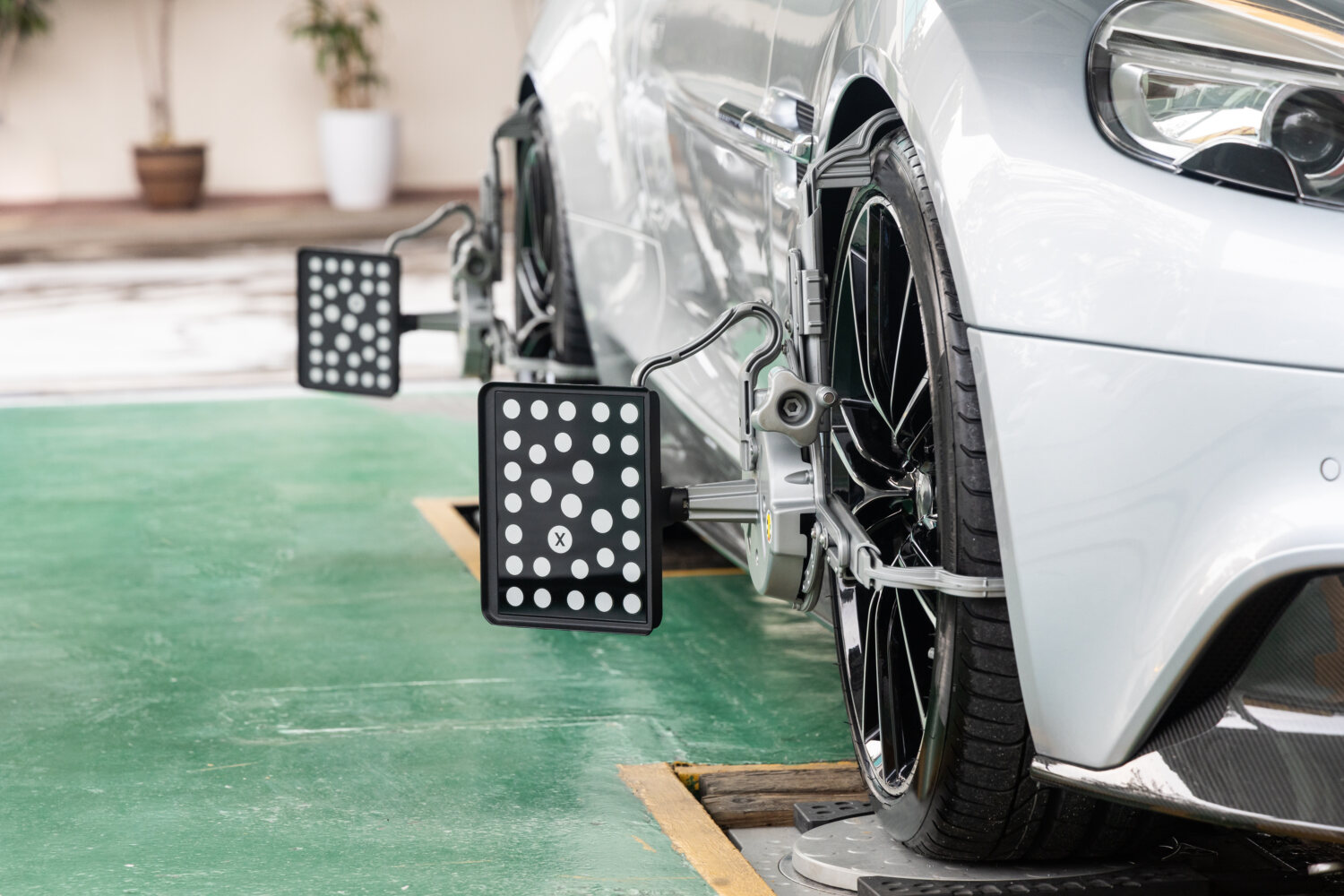
Static calibration is done in the workshop with the car stationary. Targets are set up in front of the sensors at distances and heights the manufacturer specifies, and a diagnostic tool connected to the car guides each sensor to read them correctly. The ADAS Industry Code of Conduct, released in 2025 by the Australian Automotive Aftermarket Association (AAAA), says all static calibrations must be performed indoors in a controlled environment that meets manufacturer requirements. That means a large, level floor, consistent lighting, and no large metal objects nearby to interfere with radar and cameras.
Dynamic calibration
Dynamic calibration happens on the road. A technician drives the car under specific conditions, usually at set speeds on roads with clear lane markings, while a scan tool lets the system relearn its reference points. It needs less dedicated floor space, but depends on suitable roads, traffic and weather.
When your car needs both
Plenty of vehicles need both, in an order set by the manufacturer’s procedure for your make and model. A radar might be aimed statically in the workshop, then confirmed on a road drive.
| Static calibration | Dynamic calibration | |
|---|---|---|
| Where it happens | Indoors, in a controlled workshop bay | On the road, under set driving conditions |
| What it needs | Level floor, controlled lighting, manufacturer-specific targets, diagnostic tool | Diagnostic tool, suitable roads, set speeds and distances |
| What can slow it down | Positioning targets precisely for each sensor | Traffic, weather and road conditions |
| Main cost influence | Bay time and target equipment | Technician drive time, which can vary |
What Drives ADAS Calibration Cost
When a repairer prices calibration, they’re pricing the manufacturer’s procedure and everything needed to carry it out properly.
How many systems need calibrating, and by which method
A car with one forward camera is a different job from one with a front radar, a windscreen camera, blind-spot radars and surround-view cameras. Each system is its own procedure, and a single impact can affect several at once. Front-end damage is the usual example, because a bumper repair can disturb parking sensors and radar at the same time. Providers commonly charge for each additional calibration, and a system needing both static and dynamic procedures takes longest.
Manufacturer tooling, software and repair data
This is the part most cost explainers leave out. The AAAA Code calls for manufacturer diagnostic tools capable of full ADAS calibrations, manufacturer-specific targets for each safety system, and access to licensed manufacturer diagnostic software. On some newer vehicles with secure gateways, the technician and their tooling must be registered with the manufacturer before calibration can happen at all.
The repair information has a price too. Under the federal Motor Vehicle Service and Repair Information Sharing Scheme, manufacturers must make service and repair information available to Australian repairers, who buy it at a price that can’t exceed fair market value. No single diagnostic tool covers every make either, so doing the job to the manufacturer’s procedure carries real equipment and subscription costs.
Getting the car ready first
Calibration is only accurate if the car sits and tracks correctly. The AAAA Code lists correct tyre pressures, even tyre wear and ride height within manufacturer specification as preparation steps, and recommends a complete wheel alignment check before calibration begins. Some manufacturers also require calibration after any alignment adjustment.
Scans, verification and paperwork
A proper calibration is bookended by diagnostic scans: a pre-scan before work begins and a post-scan once repairs are complete. The Code also says a calibration certificate should be supplied to the customer after the repair, with records kept by the workshop. It’s worth asking for.
What to Expect to Pay for ADAS Calibration
For a standalone job, there are some published reference points. Bosch Australia told carsales that drivers could budget roughly $300 for a basic recalibration, taking anything from 15 minutes to a few hours depending on the vehicle. Price lists published by Australian windscreen and calibration providers today still tend to start around that mark for a single calibration.
Treat that as a starting point, not a quote. Multiple systems, a static procedure followed by a road drive, an alignment beforehand, or programming a replacement sensor will all add to it.
Calibration inside an accident repair is priced differently again. It’s one line in a wider repair scope that includes the bumper, panels or paint that triggered it, and those repairs must be completed correctly before calibration can be done.
If you’re claiming through insurance
Where calibration is needed to complete the repair properly, it’s normally assessed and approved as part of the repair scope rather than billed to you separately, though coverage always depends on your policy. Through one of Capital SMART’s partnered insurers, calibration requirements are identified at assessment and carried out or coordinated as part of the approved repair. Read more about how insurance repairs work with us.
If you’re paying privately
For a private repair, ask for calibration to be itemised so you can see which systems are being calibrated and by which method. At Capital SMART, it’s itemised in your quote and handled as part of the repair, not left for you to arrange afterwards. Our ADAS calibration service page explains how it fits into the repair process.
Questions to Ask Before You Approve a Calibration Quote
- Which ADAS systems on my car need calibrating, and why?
- Is the manufacturer specifying static, dynamic or both?
- Will the work follow the manufacturer’s procedure for my make and model?
- Are pre-repair and post-repair scans included?
- Will I receive a calibration certificate or report when I collect the car?
- Is a wheel alignment needed first, and is it included?
Frequently Asked Questions
How much does ADAS calibration cost in Australia?
Published prices for a single, basic calibration generally start around $300, but there’s no fixed figure. The final ADAS calibration cost depends on the number of systems, the method the manufacturer specifies and any preparation such as a wheel alignment.
Is static or dynamic calibration cheaper?
Neither is always cheaper. Static calibration needs a dedicated bay and manufacturer-specific targets, while dynamic calibration needs technician time on the road, which varies with traffic and conditions. You also can’t pick one to save money, because the manufacturer’s procedure decides which method your car needs.
How long does ADAS calibration take?
It depends on the vehicle and how many systems are involved. A single static calibration on a straightforward vehicle can be completed well within a day, while several systems, an alignment first and a road drive to finish will take longer. We confirm an estimated timeframe once your vehicle has been assessed.
Can I skip ADAS calibration to save money?
It’s not a safe saving. A miscalibrated system often shows no warning light, so you may not know your emergency braking or lane keeping is reading the road incorrectly. The AAAA Code is clear on this point: if a customer declines calibration, the safest approach is for the workshop to refuse the service.
Get Your Repair Scoped Properly From the Start
The real cost of ADAS calibration isn’t the line on the quote. It’s what happens if it gets missed. A complete repair returns your car as safe as it was before the accident, including the systems you can’t see. Find your nearest Capital SMART repair centre or request a private quote, and we’ll explain what your repair, and any calibration, involves.